
Guide
Sage vs palo santo.
A considered comparison, scent, burn, sustainability, and which belongs in which kind of room.
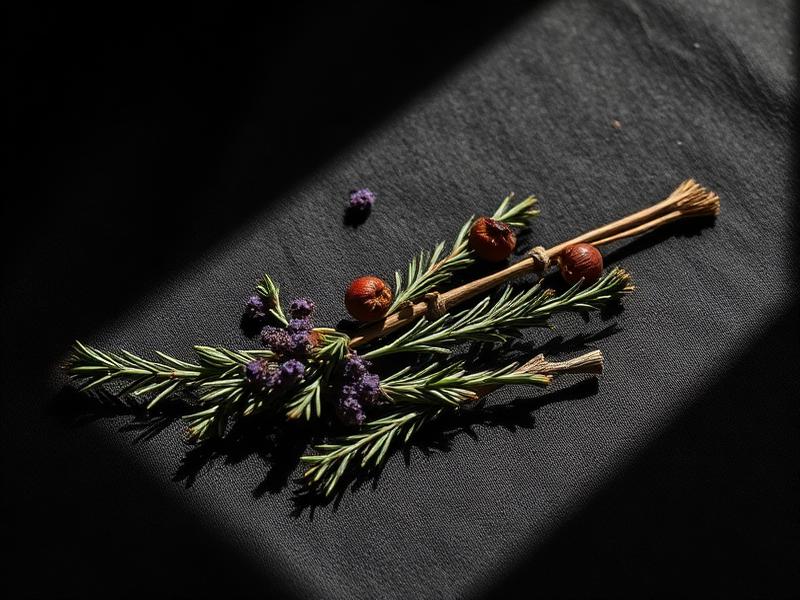
A considered comparison, scent, burn, sustainability, and which belongs in which kind of room.
White sage and palo santo are usually shelved together and sold under the same loose vocabulary. They are not the same thing. They are different plants, from different continents, with different histories and different behaviors once lit.
Treating them as interchangeable is the reason most people quietly disappoint themselves with one or both. Naming the difference is the beginning of choosing well.
White sage, Salvia apiana, is a woody perennial shrub native to the chaparral and coastal scrub of Southern California and northern Baja. Its leaves are silver-green, heavily oiled, and unmistakably aromatic. The plant has been stewarded for centuries by the Indigenous nations whose lands it grows on, and it carries ceremonial weight in traditions that are not ours to teach.
Burned, white sage produces a sharp, green, almost medicinal smoke. The plume is dense and long-lived. The bundle wants to be relit more than once. Ash falls steadily; a deep, heavy vessel is not optional.
The harder truth is the sourcing. Most white sage on the commercial market is wild-harvested from public lands in California, often illegally, often unsustainably. Indigenous communities have repeatedly asked non-Indigenous buyers to step back from this trade. A small amount of cultivated white sage exists; it is rarely what is on the shelf. We do not sell it, and we do not recommend it. Our longer treatment of this is in White Sage, Ethics, and the Botanicals That Can Take Its Place.
Palo santo, Bursera graveolens, is a small tropical tree of the dry forests of South and Central America, with the strongest tradition of ceremonial use in the Andes. The wood becomes fragrant only after the tree has died and the heartwood has cured naturally on the forest floor, often for years. That curing is part of the scent.
Burned, palo santo produces a warm, sweet, resinous smoke, closer to amber and citrus than to herb. The smoke is lighter than sage. A stick often self-extinguishes within a minute or two, which makes it forgiving in a small room. Ash is minimal.
Bursera graveolens is not CITES-listed, and is rated Least Concern by the IUCN. A different tree sold under the same name, Bulnesia sarmientoi, is the one on CITES Appendix II. Responsibly sourced palo santo means wild-fallen wood, naturally cured, harvested under permit, and ideally traceable to a specific cooperative or region. Living trees should never be cut for it. The supply deserves restraint even when responsibly sourced.
Scent is the first answer. White sage suits open, airy spaces, an outdoor patio, a high-ceilinged living room with cross-ventilation, a workshop. The plume needs room to settle. Palo santo suits small, contained spaces, a bedroom, an entryway, a reading corner, a bathroom after a bath. The lighter smoke fits the smaller volume.
Time of day matters too. White sage reads as morning, sharp and resetting. Palo santo reads as evening, warm and softening. Neither is a rule. Both are useful frames.
For the broader question of which room asks for what kind of atmosphere, see Sanctuary, Room by Room.
Both materials carry real sourcing weight. Several open-lineage botanicals do the work cleanly without that weight.
For white sage, the honest move is to stop buying the wild commercial product. If you want the plant, grow it. If you want the practice, choose a different material.
For palo santo, ask the seller two questions. Is it wild-fallen and naturally cured? What country, and ideally what cooperative, did it come from? A seller who cannot answer either does not deserve the sale.
If you do practice indoors with either material, do it in a vessel built for the work. Wysp, by The Modern Ritualist, is a handheld device with a heat-safe chamber, a spark arrestor, and ash containment, designed to hold small, considered amounts of botanical material indoors without cleanup or hazard.
They are different plants from different continents with different histories. White sage (Salvia apiana) is a Californian shrub in the mint family, traditionally stewarded by Indigenous nations of the U.S. Southwest. Palo santo (Bursera graveolens) is a tropical hardwood from the dry forests of South America. They produce different scents, different smoke densities, and carry different sourcing concerns.
Palo santo, in most homes. It burns lighter, often self-extinguishes, and leaves less ash. White sage produces a dense plume that is well suited to outdoor or large open spaces; in a small room it will saturate soft furnishings and is more likely to trip a smoke detector. Garden sage and rosemary are gentler indoor substitutes for either.
The palo santo burned for smoke cleansing, Bursera graveolens, is not CITES-listed and is rated Least Concern on the IUCN Red List. The confusion is understandable: a different tree that shares the name, Bulnesia sarmientoi or Argentine palo santo, is listed on CITES Appendix II. B. graveolens is not endangered, but its supply still deserves care. Look for sellers who specify wild-fallen wood, naturally cured for years, with a country of origin and, ideally, a named cooperative.
White sage is not formally listed as endangered, but its wild populations in Southern California have been damaged by large-scale, illegal harvesting from public lands. Indigenous communities who have stewarded the plant for centuries have asked non-Indigenous buyers to stop the commercial trade in wild-harvested white sage. Cultivated, ethically grown white sage exists but is the exception.
You can, though there is little reason to. The two have different scent profiles and different intentions in the traditions they come from. Layering them tends to muddy both rather than deepen either. Pick one for the room and the moment, and let it carry the practice on its own.
Cedar, rosemary, mugwort, lavender, and juniper. Each is open-lineage, widely cultivated, and burns cleanly indoors. Our guides on white sage and on indoor practice both treat these in more depth.
The claims in this guide about white sage and palo santo are drawn from the following sources. Where a specific statement is not covered below, it is written as attributed context rather than as a sourced fact.
How-to
Ventilation, vessel, materials, and the small design choices that make the practice sustainable in a real home.
The pillar
The longer argument: designed atmosphere instead of another routine, and the four levers that do most of the work.
Occasional letters on sourcing, materials, and the honest comparisons we have found ourselves making. Sent when a piece is ready.