Guide
Sanctuary, room by room.
Designing atmosphere where you actually live. A walk through the rooms you already use, with small, repeatable changes that let each one carry a little of the practice on its own.
Designing atmosphere where you actually live. A walk through the rooms you already use, with small, repeatable changes that let each one carry a little of the practice on its own.
Most home advice begins with a floor plan. Ours begins with a habit. Before you change a single object, watch yourself move through the house for a day. Note where you stop. Note where you reach for a phone, a snack, a switch. Those are the rooms that already shape you. They are the ones worth designing.
A sanctuary is not built in the room you wish you used. It is built in the room you already do.
The entry is the first sentence the house says to you. In most homes it says: keys, mail, shoes, hurry. A sanctuary entry says something else. It says: you are home now.
Three small moves. Clear one surface near the door. Put a single warm-bulb lamp on it, on a timer that turns on at dusk. Hang one object at eye level, a small mirror, a print, a dried branch in a vessel. Nothing else. The threshold should feel like a breath, not a checklist.
The living room is where most evenings are spent and most sanctuaries are lost. The overhead light stays on. The television stays on. The phone stays face-up. The room is technically comfortable and quietly exhausting.
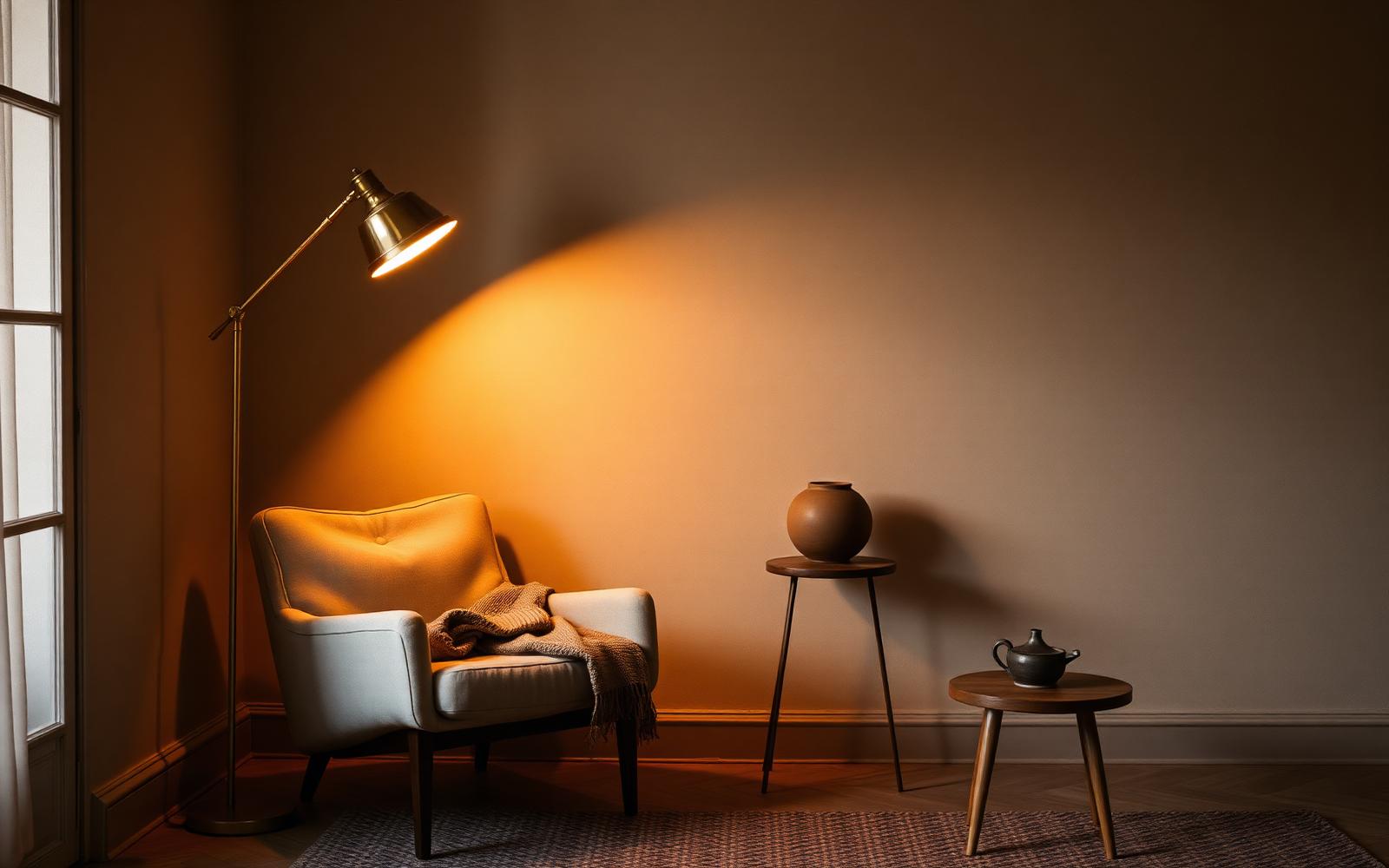
Replace the overhead with two lamps at seated height. Choose a chair, not the sofa, as the room's anchor, the place you return to when you want to read or do nothing. Add a small side table within arm's reach with one object on it, a candle, a book, a ceramic cup. The room becomes a room again.
Indoors, scent is the lever that does the most for the least. A short, contained evening burn, a piece of cedar or rosemary in a heatproof vessel, will mark the close of the working day faster than any timer on your phone. If you want a tool designed for this exact gesture, Wysp, by The Modern Ritualist, is a handheld device that holds the smoldering bundle in a heat-safe vessel, with a spark arrestor and ash containment, so the gesture repeats cleanly indoors. Anything that makes the ritual easier to repeat is worth the counter space.
The kitchen is a working room. It does not want to be silent, and it does not need to be. It wants to be intentional. Keep one counter clear at all times, no exceptions. Lower the light over it in the evening. Choose one recurring gesture, a kettle filled, a candle lit, a piece of citrus peeled into a small bowl, that marks the shift from cooking to eating.
The kitchen is also where the day's small frictions accumulate, chargers, mail, receipts. Give them one drawer, not a surface. What the eye does not see, the body does not have to manage.
The bedroom is the room that benefits most from subtraction. Remove the screen. Remove the charger. Remove the second hamper, the stack of unread books, the chair that has become a shelf for yesterday's clothes. The bedroom should hold the bed, a lamp, a single piece of art, and very little else.
Then add two things. A bedside lamp with a warm, low bulb, used instead of the overhead for the last hour of the day. And one tactile object, a wool throw, a linen sheet, a wooden bowl for keys and rings, that you touch every night without thinking. The body learns the room through repetition, not decoration.
A workspace is not a sanctuary, and it should not try to be. What it can be is a room with a hard edge, one that closes cleanly so the rest of the house can open. Build a closing ritual, not a morning one. Lamp off. Screen down. Notebook closed. One object, a pen, a cup, a stone, moved back to its place.
That small gesture is the wall between the working hours and the private ones. Without it, the office leaks into every other room. With it, the rest of the house is allowed to do its work.
Start with the room you already use most in the evening, not the one you imagine using. Sanctuary is built on existing habit, not on a renovation. The chair you actually sit in, the table you actually eat at, the side of the bed you actually reach for, those are the anchors.
No. A dedicated room is a luxury and often a trap, it concentrates the practice in a place you visit instead of weaving it into the rooms you live in. A sanctuary that lives inside the living room, the kitchen, and the bedroom is harder to abandon.
The one where the day ends. For most people that is the living room or the bedroom. If the last hour before sleep is designed, the rest of the day quietly reorganizes itself around it.
Lower the light over the counter, keep one surface clear, and choose a single recurring evening gesture, a kettle, a candle at dinner, a small bowl of citrus or rosemary. The kitchen does not need to be quiet to be a sanctuary; it needs to be intentional.
Treat the workspace as a room with a hard edge. Build a closing ritual that ends the day, not just the calendar, lamp off, screen down, one object moved back into place. The threshold is the practice.
The pillar
The longer argument behind this guide: the case for designed atmosphere instead of another routine, and the four levers that do most of the work: light, scent, sound, and touch.
Read the pillar →
A folk tradition
How juniper smoke and a slow walk through each room have marked thresholds in Scottish homes for centuries, and how the practice translates into a modern room-by-room ritual.
Read the saining guide →
Room-by-room notes on light, scent, and quiet, sent when we have something specific to say. Never on a calendar.